


Bluesky Adopts Germ Network’s New Technology for E2E Encrypted Messaging
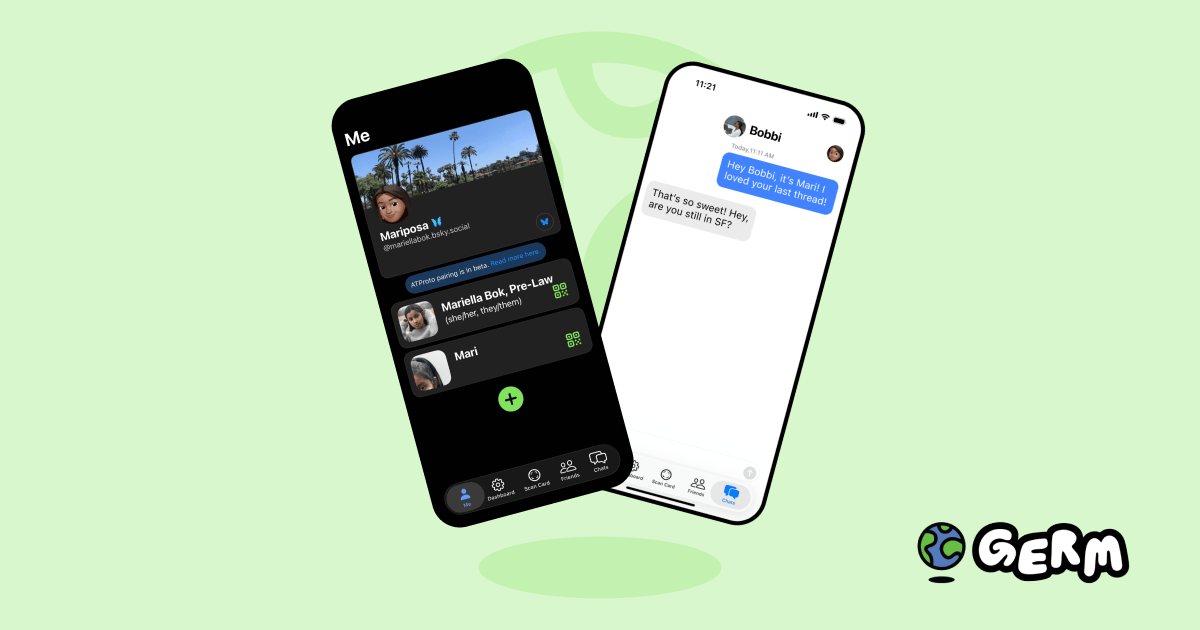
The decentralized open social network, Bluesky, has taken a significant step by integrating new technology from the startup, Germ Network. This collaboration brings end-to-end encrypted (E2E) messaging to the Bluesky app, making Germ DM the first private messenger that can be launched natively within the Bluesky app.
Along with this integration, Germ is also providing guidance that would enable other apps built on the underlying AT Protocol, which powers Bluesky, to incorporate similar functionalities.
Image Credits:Germ Network
A New Era of Open Social Networking Ecosystems
This development showcases how open social networking ecosystems can function differently from the Big Tech platforms that currently dominate the space. The major distinction is that new functionalities and features can be developed by the community itself, as opposed to being solely the company’s responsibility.
Bluesky revealed the integration with Germ earlier this month, stating that this experimental addition would enable Germ users to add a button to their profile, providing others with the ability to message them on Bluesky within an E2E encrypted environment.
 Image Credits:Germ Network
Germ’s Standalone App and Its Founders
In addition to the integration, Germ’s standalone app is now available in a public beta version on iOS across North America and Europe. The app has already seen thousands of downloads, and the number of daily active users has increased fivefold since the announcement of the official integration.
The minds behind Germ are Tessa Brown, a communications scholar who previously taught at Stanford, and Mark Xue, a former privacy engineer at Apple who worked on technologies like FaceTime and iMessage. Their goal was to offer an alternative to other E2E encrypted platforms such as iMessage, Signal, and WhatsApp using newer technologies.
Germ currently uses Messaging Layer Security (MLS), a new standard approved by the Internet Engineering Task Force (IETF), and the AT Protocol, which powers Bluesky, Skylight, and an increasing number of other social apps.
How Does It Work?
Instead of relying on a user’s phone number, Germ integrates with ATProto to enable its encrypted chats. This means that Germ’s messages cannot be decrypted by any other service, including itself or Bluesky.
To use the new messenger, you simply click on the badge on a friend’s profile on Bluesky. This opens a lightweight, temporary app known as an iOS App Clip. After logging in with your ATProto handle, you are then able to send a message to a friend immediately. Though you are prompted to download the full Germ DM app, this is optional.
If you want to add the badge to your own profile, you need to download the Germ DM app on iOS and authenticate your Bluesky credentials there.
 Image Credits:Germ Network
The Journey Towards Bluesky Integration
Germ has been working towards Bluesky integration for several months, starting with a private beta in August, which was launched using “magic links” shared in users’ bios. Now, users who set up Germ to work within Bluesky will receive a new badge that’s displayed on their profiles. This badge is more visible and easier to use than the previous link-in-bio option.
Germ has been in conversation with the ATProto developer community, including Bluesky’s app and protocol teams, since the ATmosphere Conference in Seattle last year. The feedback from the private beta, as well as the desire for better AppView support, led to the development of the native UI.
Future Plans and Monetization
Currently, Germ is focused on delivering more everyday messaging features rather than monetization. However, in the future, the company may explore paid features centered on the needs of prosumer power users like creators, journalists, and politicians. Some potential paid features could include support for multiple handles and private AI-powered screening for first messages from new connections.
Here is the source link for more information.

