



Understanding the European Tech Acquisition Landscape
For many European technology founders, an acquisition transaction often comes with a trade-off: financial advantage at the expense of operational freedom. However, a well-executed acquisition can allow founders to reduce risk while retaining future benefits through earnouts. This strategy often serves as a safer alternative to venture capital financing, which tends to dilute ownership and elevate risk without necessarily guaranteeing a larger payout.
According to Sifted data, between May 2025 and May 2026, 753 startups were acquired across Europe. This figure represents only a slight decrease compared to the 804 companies acquired during the same period of the previous year. Interestingly, a growing number of venture-backed startups are raising capital to fuel acquisitions. To date, 17 startups have raised funding with plans to utilize at least a part of the capital for acquisition purposes, including Swedish AI legal tech unicorn Legora and UK-based proptech company Dwelly.
Visma’s Unique Acquisition Approach
European software company Visma is actively rewriting the traditional M&A playbook by acquiring promising early-stage companies and allowing them a high degree of independence. “We don’t believe much in full integration. We want most decisions to be made very close to the customer and the market,” says Ari-Pekka Salovaara, director of growth at Visma.
“The reason our acquired founders stay after earnouts is that we act like a club of other founders,” Salovaara adds. “You still have operational freedom but you are not alone. You have help from your peers.”
Identifying Future Leaders
When evaluating companies for acquisition, Visma targets those with strong teams, promising products, and high customer satisfaction. A decade ago, the focus was more on businesses that were already profitable and mature in the market, according to Salovaara.
Bernat Ripoll, CEO of Holded
“But the problem is you’re buying companies that are older and may no longer be able to capture the future market. The biggest learning curve has been picking these future winners earlier.”
When Visma acquired Holded in 2021, the company was not looking to sell. “We have just raised a Series B round (15 million euros) six months before the acquisition,” explains Ripoll. “Then Visma approached us the same week and two other players approached us as well. The momentum happened.”
Operational Autonomy and Collaboration
After closing an acquisition, Visma values operational freedom within its portfolio companies. The acquired companies retain their existing management, processes, and CRMs, adopting only standard communication tools such as Slack to facilitate cross-company collaboration.
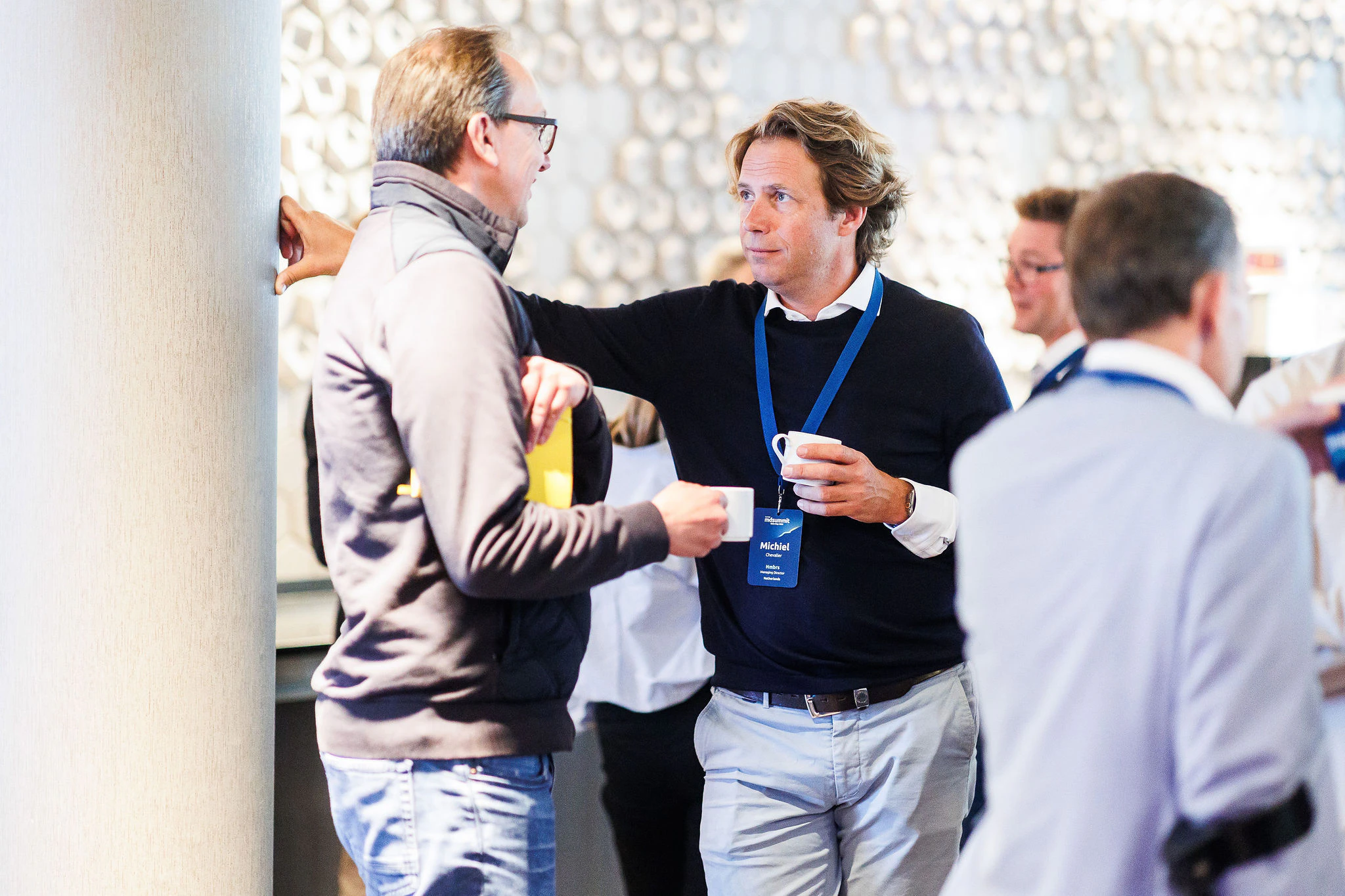
Michiel Chevalier, general director of Nmbrs
“If you try to make decisions centrally, the problem is you don’t really see all the details of that specific market and that specific customer,” says Salovaara. Ripoll and his co-chief executive are still part of Holded four years after the sale. The company now has access to shared accounting, billing, and financial technology resources.
“We can have intelligent conversations about how to grow the product, not just the business,” Ripoll says. “As long as we are aligned with the board, the independence is really the same as it was before we sold.”
Creating a Founders’ Club
Acquisitions can address leadership isolation. As a CEO, you always feel “a little bit alone at the top,” says Chevalier, who, after selling to Visma, became part of the CEO community of other founders. Visma companies don’t need to reinvent the wheel either. If 500 different AI experiments are running in the group, founders can review the best results of their peers, saving time and resources, Salovaara says.
“Acquisitions are ultimately about trust,” Ripoll adds. “As a founder, you’re going to work with people from Visma and you really have to get along with those people in order to continue the journey.”
Working with Visma has also enabled Holded employees to have conversations with other portfolio companies, he adds. “We may not be in the same market, but we can have very transparent conversations. For example, ‘In France they do this, in another country they do that,’ so we learn from each other.”
“Visma also uses this aggregated data to enable us to be competitive,” adds Ripoll. “For example, we want to be the company that grows the most in a quarter or the company that makes the most money per employee. It pushes our team because they want to win. Having that mentality creates healthy competition because you don’t win or lose anything, it’s just for yourself.”
For further reading on Visma’s acquisition strategies, click Here.
“`

