


In a groundbreaking development, Apple researchers have introduced SimpleDesign, an innovative AI model designed to seamlessly create protein sequences and structures. This advancement marks a significant step forward in the field of protein design, blending cutting-edge technology with biological science.
A Bit of Context
In September 2025, Apple researchers unveiled a study titled “SimpleFold: Folding Proteins is Simpler than You Think.” This work introduced a streamlined methodology for predicting a protein’s 3D structure from its amino acid sequence using a flow-matching model. This approach contrasts with traditional diffusion models by utilizing a more direct path to achieve final results, thus avoiding the iterative noise removal process.

Flow matching, historically linked to image generation, has now been successfully applied to protein folding by combining it with general-purpose Transformer blocks. This innovation allows SimpleFold to bypass the computationally expensive techniques that models like DeepMind’s AlphaFold employ.
Building on this foundation, Apple has now introduced SimpleDesign, which extends the principles of SimpleFold to address the more comprehensive challenge of protein design.
Introducing SimpleDesign
Apple’s new study, “SimpleDesign: A Joint Model for Protein Sequence and Structure Codesign,” proposes a novel approach to protein design. Traditional models typically rely on a multi-stage training process, starting with autoencoders that tokenize data into latent representations. SimpleDesign, however, streamlines this by utilizing a single end-to-end training process that directly learns from the data space.
This approach allows SimpleDesign to generate amino acid sequences and continuous 3D structures simultaneously, eliminating the need for intermediate tokenized representations. This direct learning method sets SimpleDesign apart from existing models.
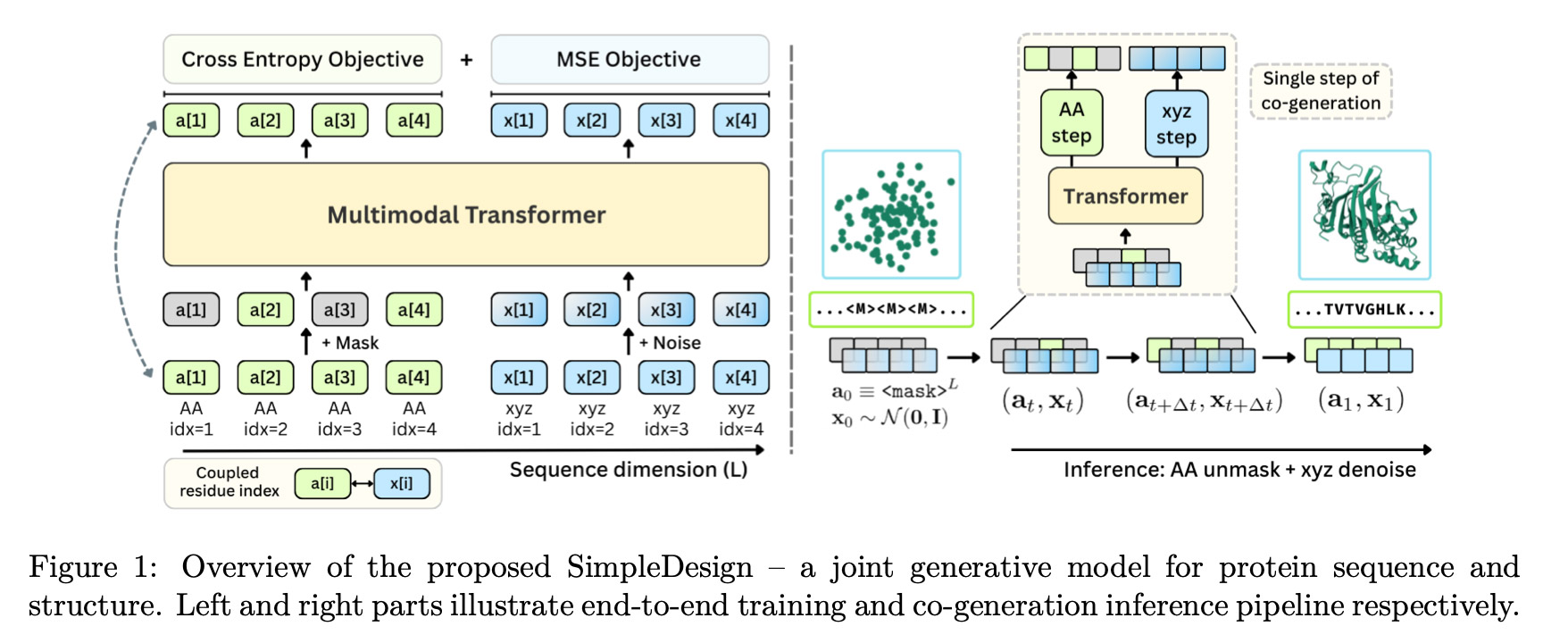
SimpleDesign skips traditional multi-stage processes by learning directly from paired amino acid sequences and 3D coordinates. This direct learning approach enables the model to effectively perform protein co-design by simultaneously generating sequences and structures.
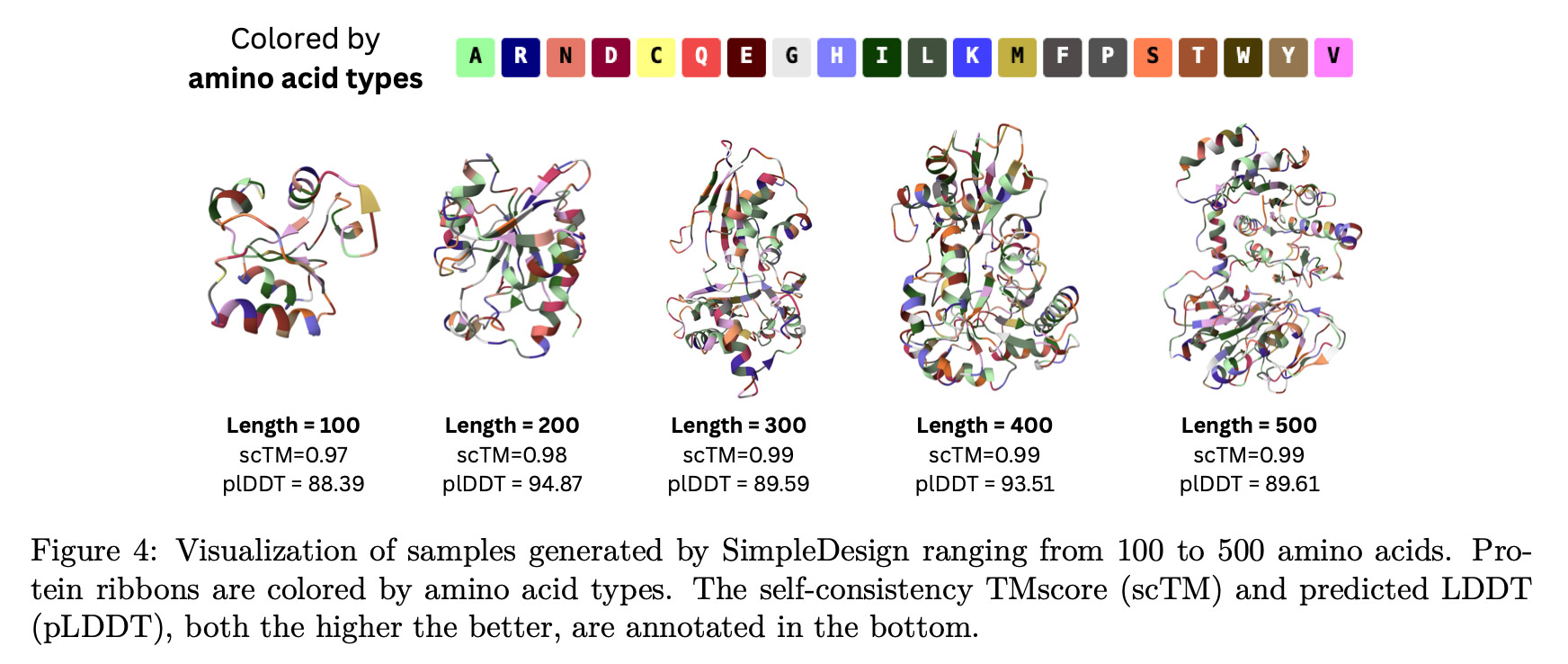
Training and Results
Apple researchers trained SimpleDesign using over 2 million protein sequence-and-structure pairs from the AFESM dataset. During training, both sequences and structures were deliberately corrupted to simulate conditions of protein folding and inverse folding, effectively enhancing the model’s co-design capabilities.
The study’s results highlight SimpleDesign’s competitive performance across benchmarks for protein co-design, structure generation, and sequence generation, despite utilizing a simpler training pipeline compared to other models.
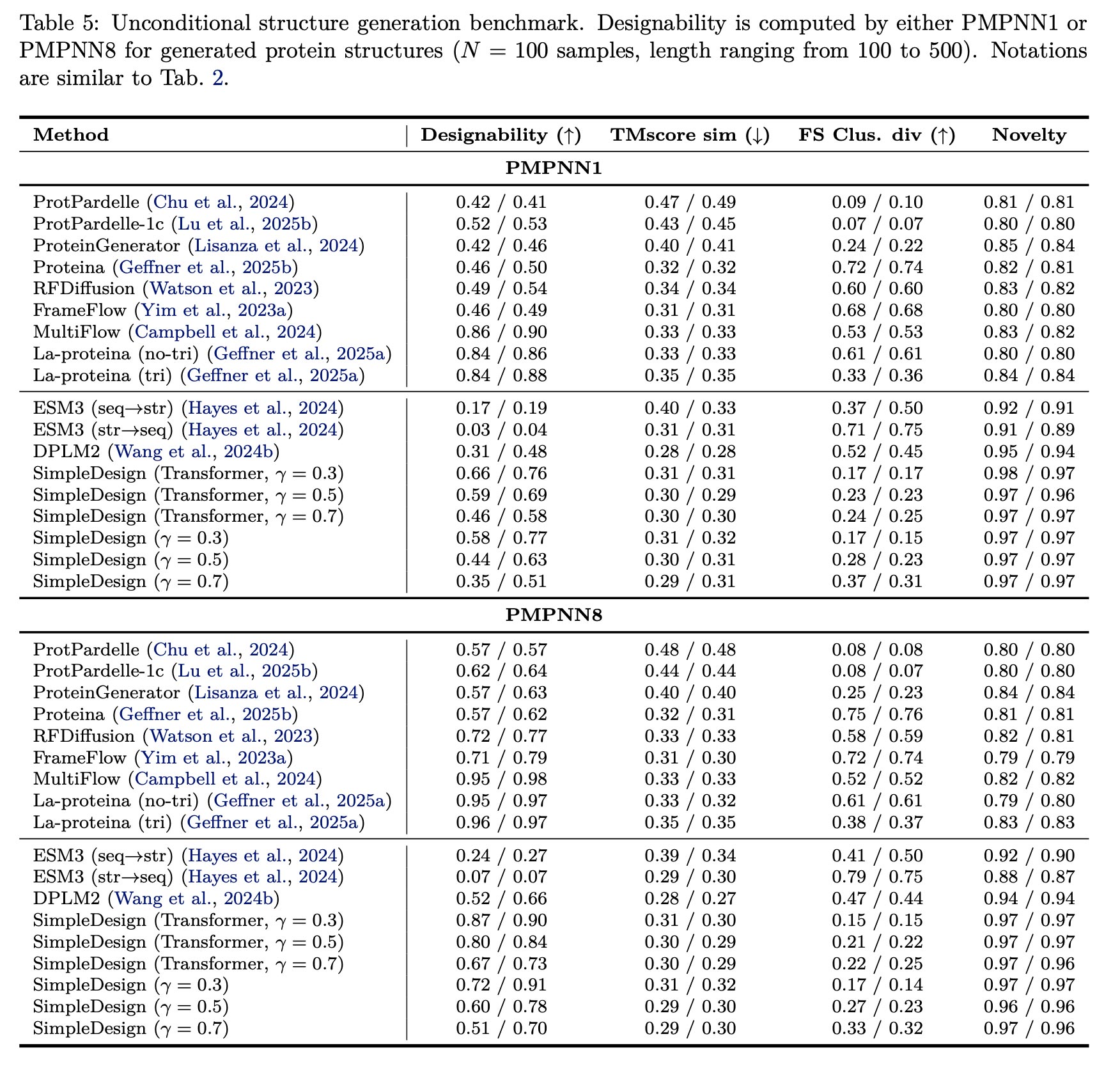
While the generated proteins have not been experimentally validated in biological systems, the computational results are promising, showcasing SimpleDesign’s potential in revolutionizing protein engineering.
For a deeper dive into the study, visit Here.
Worth checking out on Amazon
FTC: We use income earning auto affiliate links. More.
“`
