


My Steam Deck has survived three years of me trying to replace it while loading as many odd software packages as I could. I’ve tested the challengers, tried the alternative operating systems, and realized I prefer playing some games on another device. It’s no secret that the Steam Deck changed how I approach gaming, and I’d assumed the sales figures would match my excitement level. I was wrong, at least about the sales figures and the size of the PC gaming handheld market.
Analysts estimate that Valve has sold 4 million Steam Decks since February 2022. That’s a big number, but let’s bring you back to Earth with a bump because Nintendo sold 3.5 million Switch 2 consoles in four days. One long weekend for the Nintendo Switch 2 that nearly equals the lifetime sales of the most successful PC gaming handheld ever made. The category is exciting, but it’s also a tiny fraction of the PC gaming market, and sometimes we forget that.
Valve created this market
Maybe we should be surprised it doesn’t own more of it
Valve doesn’t share sales figures, but the best estimate from analyst firm IDC, shared with The Verge in early 2025, was four million sold at that point. That’s the lion’s share of the PC gaming handheld market at that point, which was roughly 6 million sold in total.
It’s no real surprise, because in 2022 the market was 1.62 million units, and they were effectively all Steam Decks. Once challengers from Lenovo, MSI, and Asus turned up, Valve’s share leveled off to roughly 50% across 2023 and 2024. Three flagships took half the remaining market, and let’s not forget those were all more expensive than Valve’s offering.
The only nod to these numbers from Valve came late in 2023, when it told reporters it sold “multiple millions.” That’s as close to a published sales figure as we’ll ever get.
The entire PC gaming handheld market is a slow quarter for Nintendo
And boutique brands are a rounding error
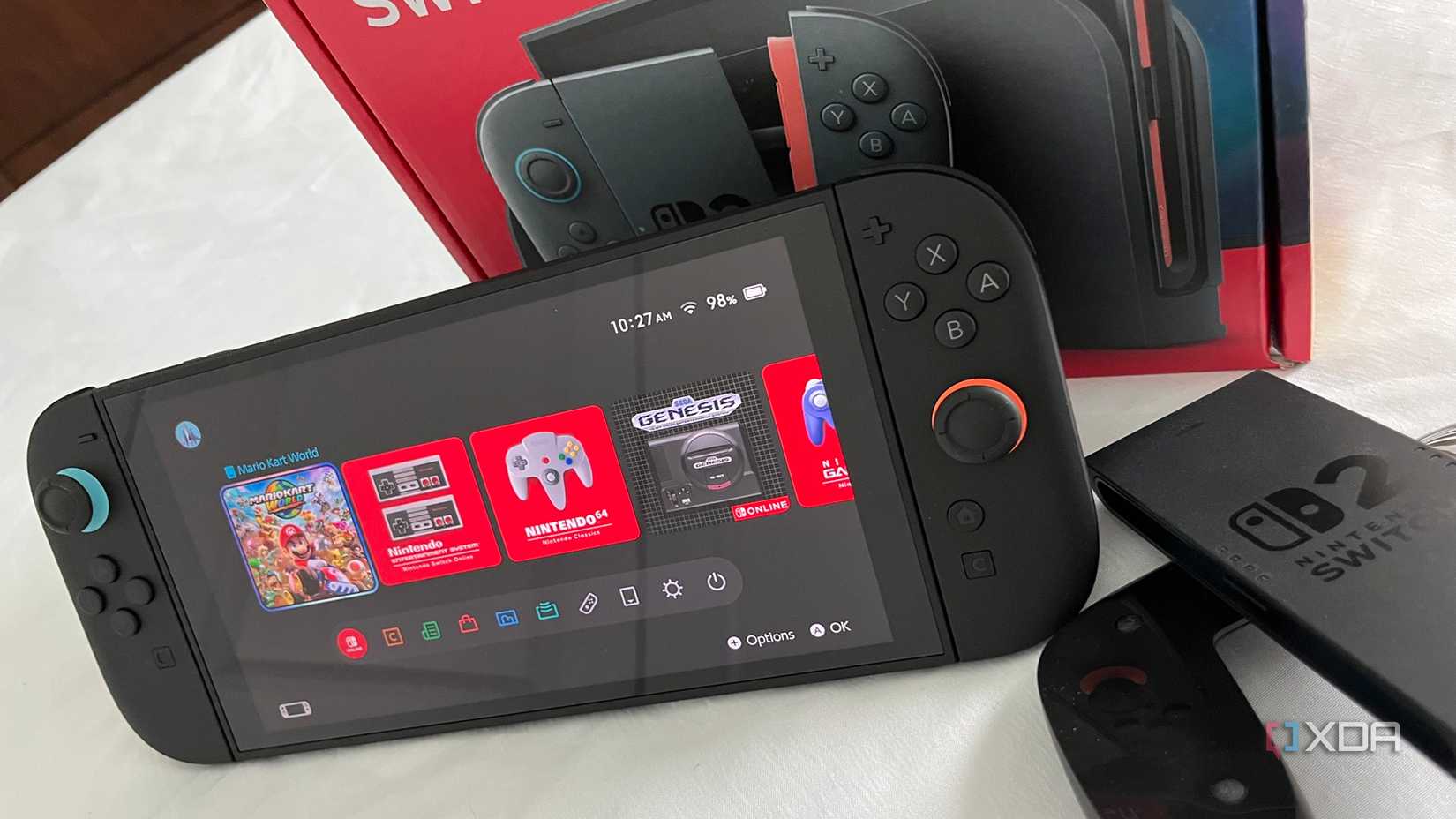
If we take every PC gaming handheld sold since 2022, the category remains a niche. 6 million units sold across mainstream and boutique brands is a failure when compared to any other handheld console. Yes, even the N-Gage, which sold 3 million on its own, even when it looked like a pastry, and consumers weren’t used to doing things on their phones other than calling and texting.
Year | IDC estimate | Omdia estimate |
|---|---|---|
2022 | 1.62 million | — |
2023 | 2.87 million | — |
2024 | 1.49 million | 1.7 million |
2025 | 1.93 million (est) | 2.3 million (est) |
Let’s look at analyst numbers. 2023 was the best year so far for PC gaming handhelds, possibly due to the Steam Deck OLED launch, but sales dropped sharply the next year. Also, the large difference in the two analyst numbers is down to how much of this is estimated. Maybe we’re at 8 million units across the segment by now, perhaps edging toward 9.
The Nintendo Switch 2 sold 23.68 million units in 13 months, and even a slow quarter still totaled 3.82 million. The original Switch sold 660K units in that same ‘slow’ quarter, and it’s nine years old. The numbers for almost every other handheld console are similarly impressive, and that’s not going into TV-destined options. Valve isn’t competing with Nintendo, but then again nobody is.
Why does every manufacturer want in on this category?
Surely the R&D alone would make the maths not math
SteamOS is roughly 0.9% of all Steam users, based on the July 2026 Steam Hardware Survey. The PC gaming handheld market is roughly 8 million units over four years. My napkin maths puts that at roughly $1 billion in hardware sales (based on a $550 average per unit) per year, in an industry that Newzoo sizes at $197 billion for 2025. These are not the type of sales figures that convince executives to make gaming handhelds.
But it’s a niche that has rippled through the industry. Microsoft rebuilt Windows 11’s handheld gaming mode, then put the Xbox brand on Asus hardware. Valve is pushing SteamOS beyond the Deck, with the Steam Machine and upcoming Steam Frame. Linux’s share of Steam has doubled in two years, and the Deck is the driver of that. Oh, and every Linux distro can now play Windows games, thanks to the Proton layer that Valve bankrolled.
Microsoft had to adapt because Lenovo decided to build a SteamOS version of its handhelds. The successor to the Steam Deck is still some ways off, because Valve has said it needs to see a generational leap in hardware capability first. That gives plenty of time for other brands to try to come for the crown, but based on the last few years, they’ll miss.
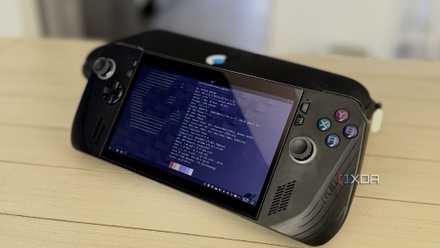
The Steam Deck had an outsize effect on the industry
It’s perhaps unfair to compare the Steam Deck to the Nintendo Switch 2. After all, Nintendo is its own industry segment, with none of the traditional console manufacturers really competing with it. But the parallel to Valve isn’t unwarranted, because neither has a viable competitor. The Steam Deck won by being first, cheaper, and less annoying to use. That’s Nintendo’s playbook. Okay, maybe not always “cheaper,” although given the current RAM pricing, it actually is. The PC handheld gaming market might be small now, but so was the handheld console market at one point.
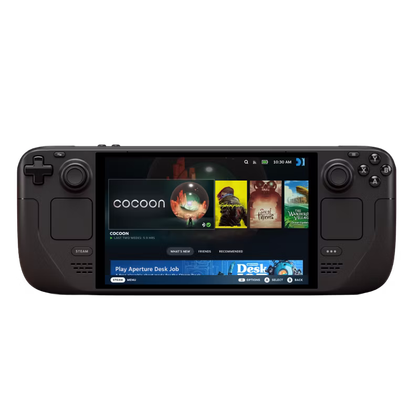
Dimensions 11.7 x 4.6 x 1.9 inches (298mm x 117mm x 49mm)
Brand Valve
Weight 1.41 pounds (640 grams)
Chipset Custom AMD Zen 2 APU (4 cores/8 threads, up to 3.5GHz boost)
RAM 16GB LPDDR5 6400MT/s
Storage 512GB or 1TB NVMe SSD, microSD card slot
Source: Here
“`
