



Exploring the Complexities of OLED Technology
Whether you’re crafting a home theater setup or aiming for the ultimate picture quality on your gaming PC, OLED technology is often the go-to recommendation for color reproduction and viewing experience. It is indeed remarkable, but it comes with its own set of challenges. The intricacies of OLED manufacturing lead to nearly flawless panels, yet even these can exhibit issues such as color banding.
Understanding Color Banding in OLED Displays
Color banding is a visual artifact where smooth gradients appear as distinct bands of color. This is particularly noticeable in scenes with subtle color transitions like sunsets, smoke, or fog. While OLEDs are celebrated for their superior contrast and deep blacks, these very qualities can make color banding more prominent, especially in darker scenes.
Manufacturing Challenges and Playback Issues
The near-perfection of OLED panels paradoxically contributes to color banding. Any inconsistencies in panel manufacturing can result in variations in color and luminance, which our eyes are adept at detecting. Additionally, color banding can stem from issues within the playback chain, such as displaying 8-bit content on a 10- or 12-bit panel, or incorrect color space conversions between RGB and YCbCr.
Color Banding: An Unresolved Issue
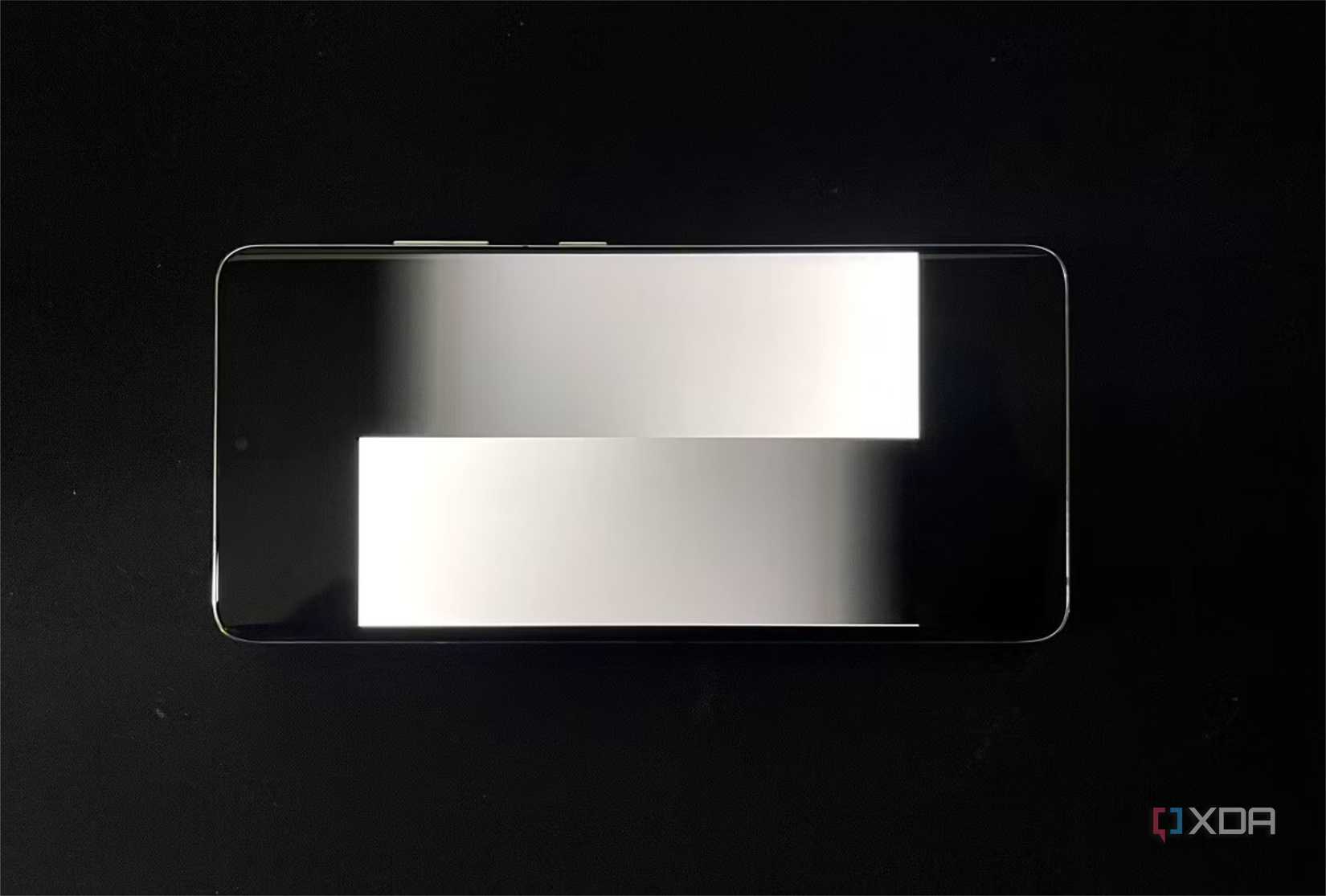
As illustrated by the image of Samsung’s Galaxy S21 Ultra, color banding remains a concern in OLED technology. Achieving smooth gradients on a micro scale is complex, leading to distinct color bands rather than seamless transitions. This issue is not limited to smartphones; it is also observed in WOLED gaming monitors, though not uniformly across all panels.
Testing Your OLED Screen
If you’re curious, you can easily test your OLED screen for banding by playing a grayscale video and adjusting the brightness to reveal banding in the 85% grayscale region. Keep in mind that not all panels are equally affected, and the prevalence of online complaints may not represent the overall quality of OLED displays.
Tandem OLED: A Double-Edged Sword?
Tandem OLED, which involves two layers of OLED, may exacerbate banding issues due to increased manufacturing variability. While this is more pronounced in tandem OLED monitors, it is less noticeable in smaller screens, possibly due to pixel size differences.
QD-OLED: A Different Approach
QD-OLED technology offers a unique alternative, with fewer issues related to banding. This is largely due to its absence of a white pixel and superior gamma tracking across the luminance range, resulting in less variance and a reduction in banding and black crush.
Mitigating Color Banding in OLED
If you own an OLED TV or monitor, there are steps you can take to mitigate banding. Allow the panel some time to settle, use high-quality sources, and explore TV settings that offer smoothing options. Avoid manually running pixel refresh cycles, as automated cycles are more reliable.
The Reality of OLED Color Banding
While color banding is an inherent challenge in OLED technology, it does not universally impact the viewing experience. Opt for high-quality content and consider QD-OLED over WOLED for reduced banding. As technology advances, future developments like nanoLED may offer solutions to these persistent issues.
For more detailed insights, you can read the original article Here.
“`

